
Short breathing, imagination, soothing sounds and bedtime rituals can make calm easier to understand through the body and senses.
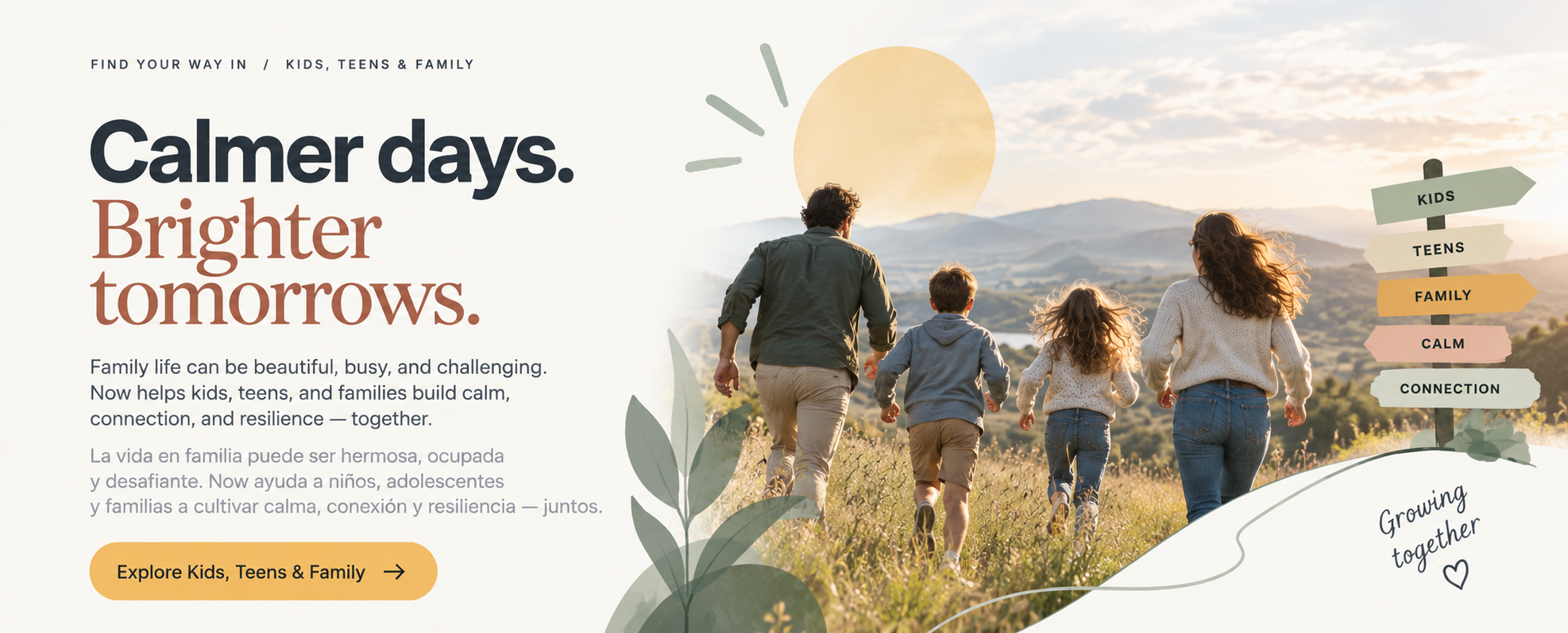
Calm is not one-size-fits-all
Regulation changes as we grow.
Children often borrow calm from the adults around them. Teens are building more independence while their emotional and social worlds become more complex. Parents may be supporting everyone while managing their own load, and grandparents or older adults may be looking for gentler ways to rest, reset or share a quiet moment with the people they love. The goal is not a perfectly peaceful household. It is more ways to pause, reconnect and begin again.
A practice can be an option rather than an instruction — a private way to reset, focus, sleep or make space when emotions feel intense.
A small pause for yourself can change the tone you bring into the next conversation, bedtime, school morning or difficult moment.
The atmosphere between us
Calm can travel through generations.
Children, teens, parents and grandparents can all influence the atmosphere around one another. Calm is not something that only moves from adults to children: a grandparent can offer steadiness to a grandchild, a teen can share a practice with an older relative, and a family can create quiet moments together.
slow your own breath→soften the pace→make room for connection
Real family moments
Wellbeing has to fit inside real life.
One minute of breathing or a familiar song can become a simple cue between rushing and beginning.
Quiet, sound or a little space can help everyone transition before questions, homework and the next demand.
Sometimes being present and helping the body settle is more useful than immediately trying to explain the feeling away.
Stories, sound and predictable rituals can help mark the shift from the activity of the day toward rest.
space
Especially for teens
Support does not always need to look like supervision.
Adolescence comes with a growing need for privacy, autonomy and identity. Offering a menu of practices — rather than prescribing one — lets a teen decide whether they need focus, quiet, sleep, breathing or simply a few minutes that belong to them.
Sometimes the most respectful invitation is: “It’s here if you want it.”
Different doors for different moments
There is more than one way to make room for calm.
For attention, emotions and a mindful pauseMeditation
Choose age-appropriate guidance and keep the invitation simple rather than turning practice into another task.
↗For moments that feel activatedBreathwork
A short breathing exercise gives the body something concrete to do when words are not the easiest place to begin.
↗For homework, downtime or settlingSoundscapes
Music, nature sounds and other gentle audio can create a supportive background without requiring conversation.
↗For a break from constant inputSilence
A few minutes with less stimulation can give attention somewhere quieter to land.
↗For the transition into nightSleep Stories
A familiar story can become part of a predictable bedtime rhythm for younger listeners and anyone who likes a gentler end to the day.
↗For the people you love
Open NowMake space for everyone to find their own way in.
Explore practices for different ages, moods and moments — with room for each person to choose what feels useful today.