What breathwork is
Breathwork is an umbrella term for practices that deliberately change the rhythm, depth or pattern of breathing. Different techniques may be used for relaxation, attention, meditation or simply creating a pause.

Breathing happens automatically, but it is also one of the few body processes you can intentionally influence. Breathwork simply means using deliberate breathing patterns to shift pace, focus and how a moment feels.
Start with the basics ↓Breathwork is an umbrella term for practices that deliberately change the rhythm, depth or pattern of breathing. Different techniques may be used for relaxation, attention, meditation or simply creating a pause.
Breathing and the stress response are closely connected. Under stress, breathing often becomes faster. Relaxation practices commonly do the opposite: they combine slower breathing with focused attention to help the mind and body settle.
Breathing practices are increasingly being studied as accessible tools for stress and emotional wellbeing. A 2023 meta-analysis of randomized controlled trials found that breathwork was associated with lower self-reported stress compared with control conditions, with additional evidence of benefits for anxiety and depressive symptoms.
Breathwork is a broad category, and techniques are not interchangeable. Research continues to examine which patterns, durations and contexts are most useful.
NCCIH summarizes a 2019 review of three studies involving 880 people that found preliminary evidence suggesting diaphragmatic breathing exercises may help reduce stress.
Relaxation techniques often pair breathing with focused attention. NCCIH describes the relaxation response as involving slower breathing, a reduced heart rate and lower blood pressure.
Breathwork can be quiet and restorative or more structured and rhythmic. These are a few common ideas — not a prescription for one “correct” technique.
Gently reducing the pace of the breath, without forcing it. Often used when the intention is to settle and create space.
Allowing the abdomen to expand as the diaphragm moves, rather than relying mainly on shallow upper-chest breathing.
Using an even, comfortable rhythm for the inhale and exhale to give attention a simple pattern to follow.
Letting the exhale last a little longer than the inhale, while keeping the breath comfortable and unforced.
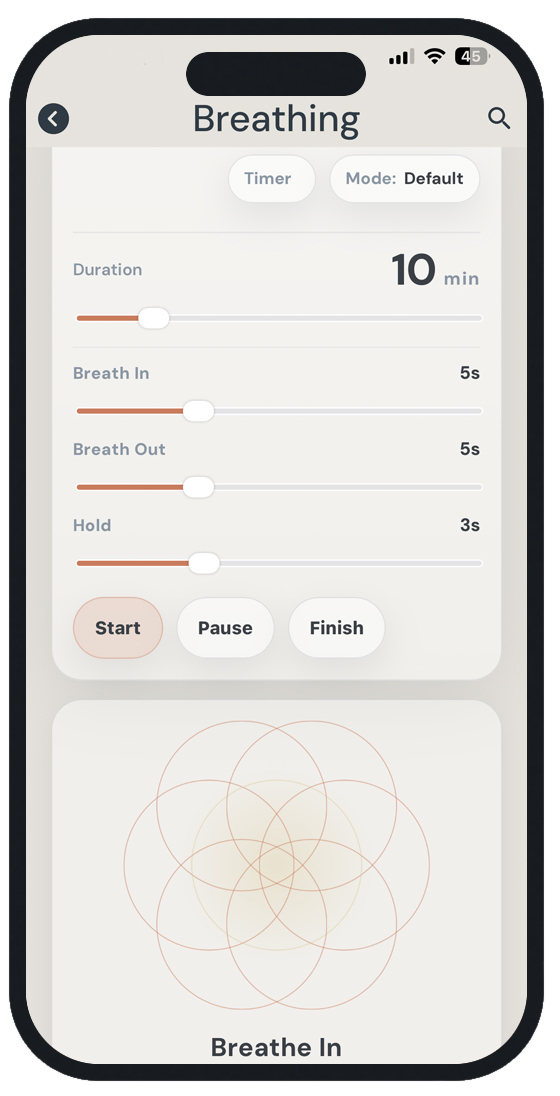
In Now, you can set a comfortable rhythm for the inhale, exhale and hold, adjusting the timing and duration to create a structured breathing practice that works for you.
Spoken cues remove the need to remember a pattern, making it easier to follow the pace and stay present with the practice.
Not necessarily. Comfortable, controlled breathing matters more than taking the largest breath you can. Overbreathing can make some people feel lightheaded.
A practice can be as simple as noticing your breathing and gently slowing its pace for a few moments.
Different bodies and circumstances call for different approaches. If a practice feels uncomfortable, dizzying or distressing, return to normal breathing and stop.
Your breath can become a pause you carry with you.
Before a meeting. After a difficult conversation. While transitioning out of work. Before meditation. At bedtime. Breathwork does not need a special room or a perfect state of mind.
The practice is less about controlling every breath and more about learning that, for a few moments, you can choose to relate to breathing differently.
Now offers guided breathwork in English and Spanish alongside meditation, sleep stories, soundscapes and silence — so you can choose the practice that fits the moment you are actually in.